
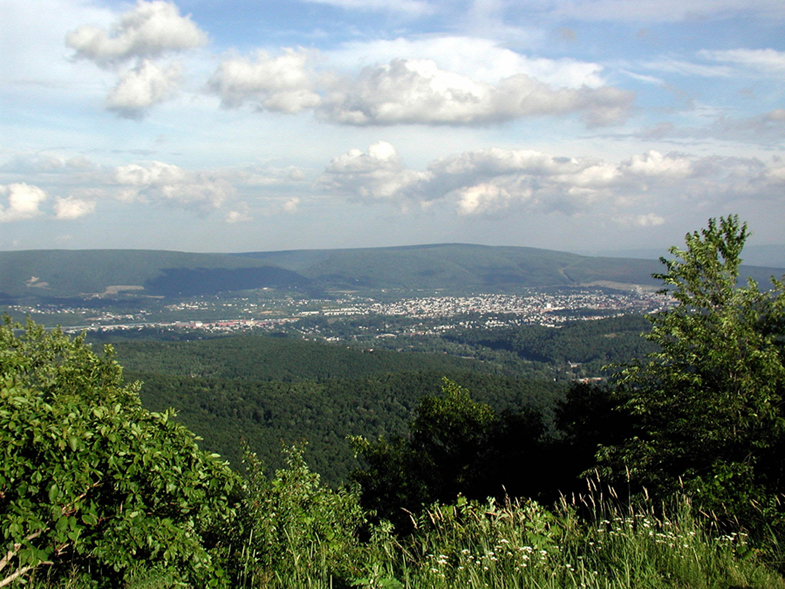
The Wopsy Railroad — officially known at various times as the Altoona & Wopsononock, the Altoona, Clearfield & Northern, and the Altoona & Northern — was plagued by financial instability, competition from automobiles, and the loss of its main destination, the Wopsononock Hotel, to a devastating fire in 1903.
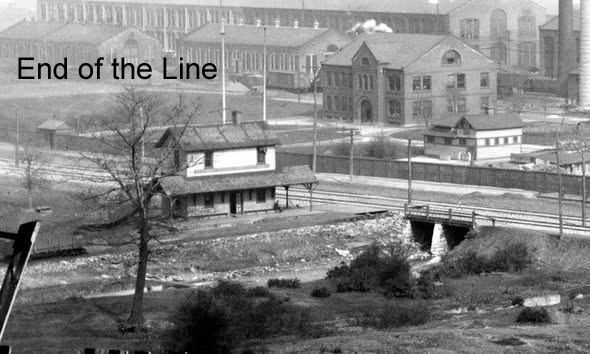
A newspaper writer, looking back some thirty years, recalled the early promise of the venture:
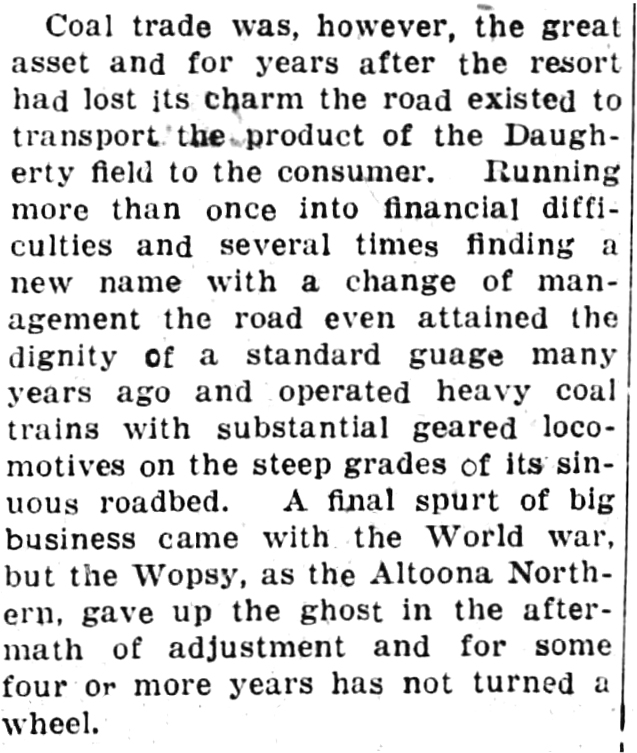
“Without recalling exact dates the writer has in mind a bright day some thirty odd years ago, when the proud stockholders of the promising narrow gauge railroad venture made the initial trip up the mountain, seated on benches on a flat car. Wopsy leaped into popularity as a warm weather resort and the mountain top was adorned with a fine hotel and an avenue of pleasant cottages stretched to the famous ‘Lookout.’ A park was designed with alluring amusements and for a time even sea lions thrived on the cool height. Trains of excursionists, Sunday school picnics — everybody went to Wopsy and no visit to Blair county was complete without a ride over the thrilling little road.”
Competition from Automobiles
As automobiles became affordable and popular in the early 1900s, fewer passengers rode the train to Wopsononock Mountain. Visitors who once relied on the narrow-gauge railroad could now drive to other, more distant destinations.
Limited Coal Revenue
The railroad’s promoters had planned to haul coal from mines in Cambria County, but the coal traffic never materialized in sufficient volume to sustain the line.
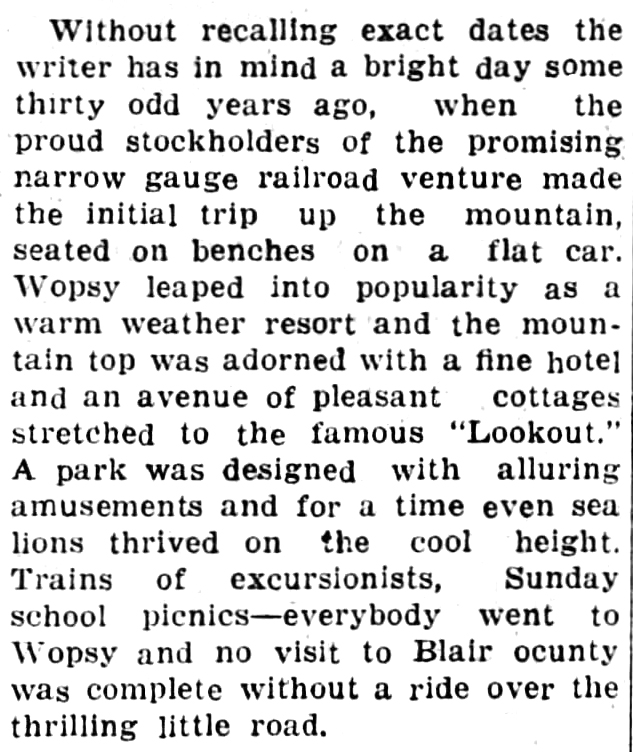
“Coal trade was, however, the great asset and for years after the resort had lost its charm the road existed to transport the product of the Daugherty field to the consumer. Running more than once into financial difficulties and several times finding a new name with a change of management the road even attained the dignity of a standard gauge many years ago and operated heavy coal trains with substantial geared locomotives on the steep grades of its sinuous roadbed. A final spurt of big business came with the World war, but the Wopsy, as the Altoona Northern, gave up the ghost in the aftermath of adjustment and for some four or more years has not turned a wheel.”
Financial Instability
The railroad entered receivership multiple times and changed names frequently — a sign of ongoing insolvency and failed reorganization efforts. By 1922, the situation had reached a standstill.
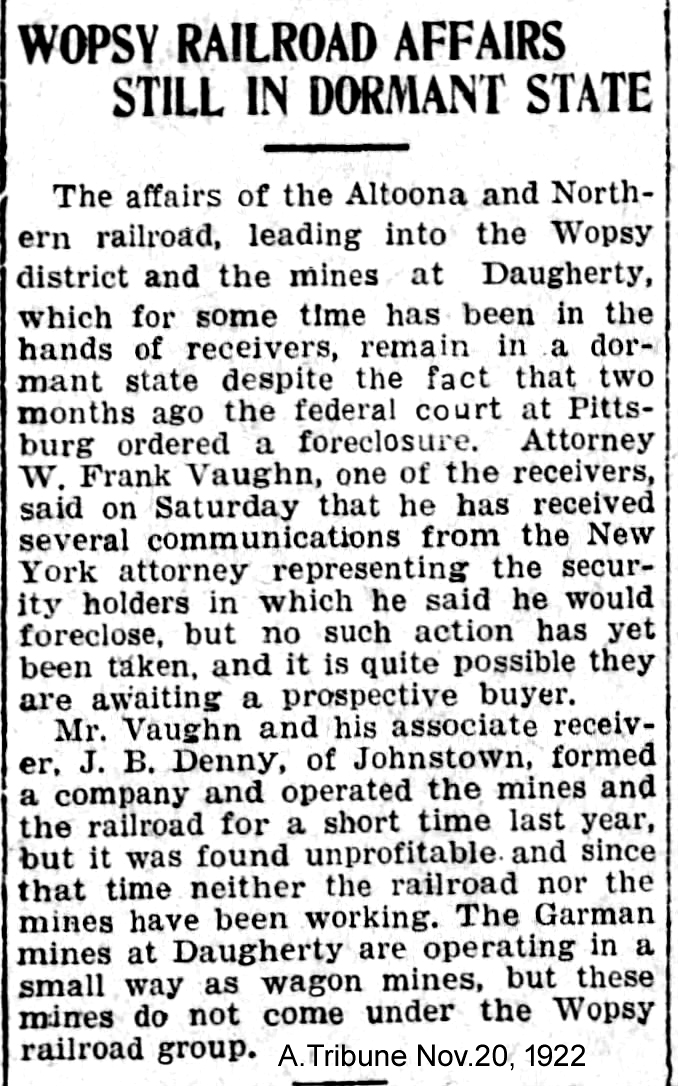
Attorney W. Frank Vaughn, one of the receivers, and his associate J. B. Denny of Johnstown formed a company and operated the mines and the railroad for a short time, but it was found unprofitable. Since that time, neither the railroad nor the mines had been working.
The 1903 Hotel Fire
On April 21, 1903, a major forest fire swept across the mountain and destroyed the Wopsononock Hotel, the resort’s main attraction. The hotel was never rebuilt. This was a devastating blow to passenger revenue and the viability of the entire operation.
The End of Operations
The last passenger train ran on July 16, 1919, and the final coal train operated on July 30, 1919. These dates are cited in The Alley Popper (Richard D. Adams, 1980). If anyone knows the origin of these dates or can independently verify them, please message us on Facebook.
Dismantled
By 1925, the rails were being torn up and sold for scrap. Some wooden structures from the resort were repurposed for other local uses — notably, the dance pavilion at Ivyside Park in 1924.
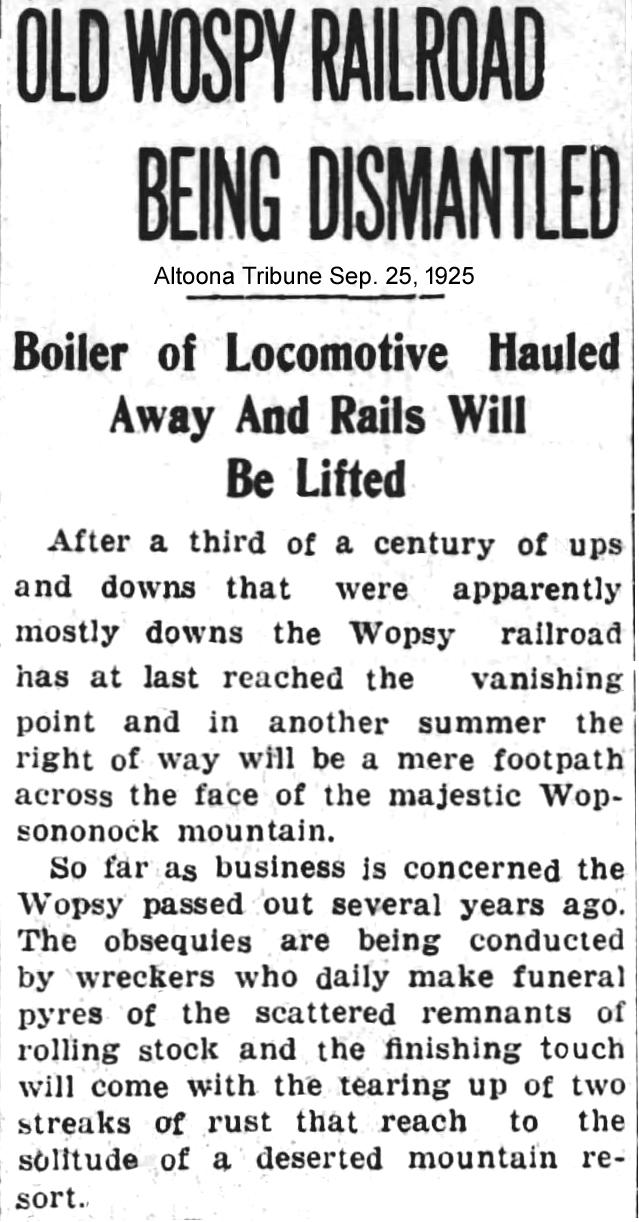
The Altoona Tribune reported: “After a third of a century of ups and downs that were apparently mostly downs the Wopsy railroad has at last reached the vanishing point and in another summer the right of way will be a mere footpath across the face of the majestic Wopsononock mountain.”
What Remains
Today, the old Wopsy railroad bed is a popular route for hiking and cross-country skiing. According to local lore, narrow-gauge railroad spikes are still occasionally found along the trail. And the breathtaking views from the Lookout still attract visitors and picnickers on clear days.